How to Choose an On-Chain Analytics Tool: An Enterprise Guide
How to choose between Chainalysis, Elliptic, or TRM Labs? A practical framework for picking the analytics tool that fits your institution.

Use AI to summarize this article
If you've sat through one on-chain analytics vendor demo, you've probably seen them all. Colourful transaction graphs, risk scores, sanctions alerts, and promises of unparalleled blockchain intelligence.
But most compliance teams don't end up with the wrong tool because they picked badly in the demo room. They end up with the wrong tool because they chose a tool that didn't align with their business model, regulatory obligations, transaction volumes, or internal expertise.
This article breaks down how to actually choose an on-chain analytics solution that fits your institution, not just the flashiest dashboard.
This article addresses:
- What on-chain analytics tools actually do (attribution vs. risk scoring)
- Where these tools make sense - VASPs, funds, DAOs, private banks, and everyone in between
- The questions to ask in every vendor demo (beyond "does the dashboard look nice")
- Total cost of ownership: what the license fee doesn't tell you
- A simple 4-step framework for shortlisting and piloting vendors
What Onchain Analytics Tools Actually Do
Blockchain is often described as transparent. Technically, that's true. Every transaction is visible. Every wallet movement is recorded. But anyone who has sat in front of a suspicious wallet at 23:00, with a Money Laundering Reporting Officer (MLRO) waiting for answers and a transaction graph looking like spaghetti after a toddler got hold of it, knows one thing: Transparency does not automatically mean understanding.
That's where on-chain analytics tools come in.
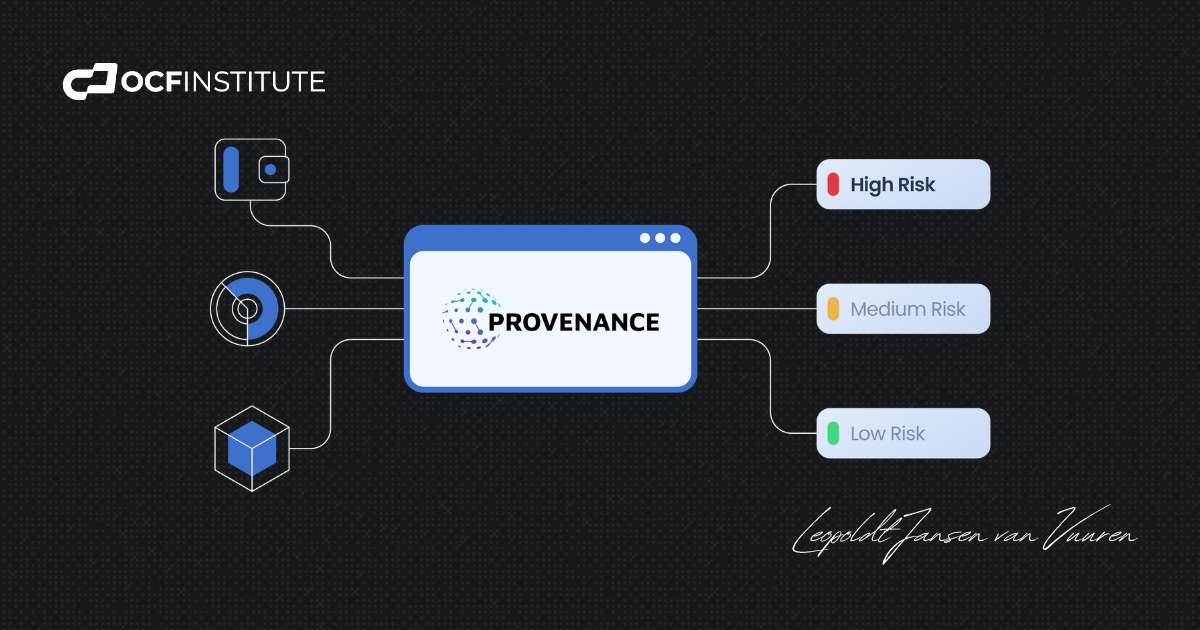
At their core, these platforms transform raw blockchain data into actionable intelligence through two key capabilities: attribution and risk scoring.
1. Attribution
A wallet address on its own tells us very little. Analytics providers use clustering, behavioural analysis, open-source intelligence, law enforcement disclosures, and community feedback to associate wallets with real-world services and entities.
Instead of seeing: Wallet A sent funds to Wallet B, you might see: Funds moved from a regulated exchange to a DeFi protocol before interacting with a sanctioned service.
That context changes everything.
I remember visiting one of these providers in New York and walking past a room where analysts were monitoring darknet sources and intelligence channels, in real time. It was a stark reminder that blockchain intelligence isn't generated by software alone. It's powered and interpreted by people.
We experienced this first-hand after helping a client who suffered a theft while using unsecured airport WiFi. By tracing the stolen Bitcoin and providing supporting evidence, we helped get the relevant address identified as associated with stolen funds. That intelligence didn't just help one client. It helped strengthen the entire ecosystem. That's the real power of attribution.
That one case did not just help one client. It contributed to a broader intelligence ecosystem, helping other compliance teams identify and respond to the same risk in future. That is the power of attribution when it works well.
2. Risk Scoring
Once a service, wallet, or counterparty has been identified, the next step is assigning risk. Modern platforms assess exposure to things such as:
- Sanctions
- Darknet markets
- Mixers
- Ransomware
- Fraud and scams
- Stolen funds
- High-risk exchanges
- Terrorist financing indicators
These scores help compliance teams focus on what matters most. But here's the important part: The tool does not make the decision for you.
A risk score is not a compliance decision. An alert is not an investigation. The platform provides information. The compliance professional still needs to apply judgement, conduct due diligence, and make a defensible decision. It also doesn’t help if you have risks identified and scoring attributed but there is no implementation and tuning to your policies. We have also seen after the fact in audits where the risk scoring is implemented day one but then there is no follow-up / periodic review.
A firm reminder that technology supports expertise. It doesn't replace it.
Where Onchain Analytics Makes Sense
We always advise clients that before reviewing vendors, understand who you are, what products you are putting to market, what your risk appetite is and what the end goal for obtaining a relevant on-chain analytics tool will be. If we think about it, you will not buy a Ferrari to bulldoze through a concrete wall. Well, the same goes with the appropriate tools. Different organizations use these tools for different reasons.
1. VASPs and Exchanges
For regulated VASPs and exchanges, on-chain analytics is often centered around transaction monitoring, wallet screening, sanctions compliance, and alert management. The challenge isn't finding alerts. The challenge is reviewing and clearing them efficiently without overwhelming compliance teams. This means scalability and automation become priorities you can't get away from. Clearing thousands of alerts on a daily basis, would require finer risk rating tuning, automation and better results on a large scale.
2. Funds and Financial Institutions
As crypto becomes more mainstream, more traditional institutions onboard crypto-exposed clients, source of wealth reviews and due diligence become increasingly important.
Questions like:
- Where did the assets originate?
- Is there sanctions exposure?
- Does the activity align with the client's explanation?
are becoming standard parts of the onboarding process. For these organizations, investigative capability often matters more than transaction monitoring.
The most appropriate use case here is Crypto Native Funds, who accept crypto payments-in-kind. Which means investors can contribute towards these funds, with their BTC, ETH, USDT etc. However, being a Regulated Fund, Source of Funds tracing remains a high priority and needs to be conducted with the onboarding process. These tools then allow for the Fund, and their MLRO, to make an informed decision once an investigation into the SOF have been completed. As you would imagine, accepting sanctioned tainted funds into a pool of Funds is less ideal, similar to distributions being made to a wallet that is associated with, or has exposure to, terrorist financing.
3. DAOs and Foundations
Next, we have the unregulated space, which primarily would use these tools for safeguarding of assets, sanctions screening and protecting their reputation by not facilitating illicit funds. Many DAOs and foundations are not required to operate full compliance monitoring programs.
However, sanctions obligations and reputational risk remain relevant to everyone. In these environments, lightweight screening and treasury monitoring solutions are often more practical than full enterprise investigative platforms.
4. The Private Bank or Wealth Manager Onboarding High Net Worth Individuals
Lastly, when it comes to your private clients, those HNWIs, who have exposure to crypto, you would even require fewer credits per month to screen, but rather want to focus on the source of wealth and funds reviews, which become critical.
You need a system capable of supporting enhanced due diligence while providing investigators with sufficient tracing and attribution functionality, rather than continuing high volume transaction monitoring systems.
We can clearly see that selecting an on-chain analytics tool is no different to buying a car. The right choice depends on your destination, budget, and requirements. A treasury team screening a handful of wallets does not need the same engine as a global exchange processing millions of transactions. The best tool is not the most expensive one, but the one that is fit for purpose.
The Vendor Landscape
Once you've defined your use case, regulatory obligations, and risk appetite, it's time to understand the vendor landscape. Today's market is dominated by providers such as Chainalysis, Elliptic, TRM Labs, Cyvers, and Hoptrail. Each brings different strengths in areas such as investigations, attribution, transaction monitoring, fraud detection, automation, and blockchain coverage.
One of the biggest misconceptions in the industry is that there is a universally "best" platform. There isn't, really.
The best solution for a global exchange processing millions of transactions each month is unlikely to be the best solution for a private wealth manager conducting a source of wealth reviews.
And that is not all, blockchain evolves quickly. New networks launch, protocols emerge, and threats change constantly. As a result, many mature compliance teams ultimately use multiple providers to leverage the strengths of each.
That same philosophy guides our own approach. We recommend solutions based on client needs, not vendor preference. Ultimately, selecting an on-chain analytics platform is not about finding the market leader. It's about finding the right fit.
The Questions to Ask in Every Vendor Demo
Once you have identified your use case and shortlisted a few providers, the next step is usually a product demonstration. And let’s be honest, every demo looks impressive. This is where many organizations make costly mistakes. Vendor demonstrations are designed to showcase their key strengths. Which is not per se wrong, as we would always showcase our best initiatives rather than the weaknesses.
The goal is to look beyond the dashboard and evaluate what really matters. I've lost count of how many times I've heard a client say: "We liked Tool A because the dashboard looked better.".
Yes, look and feel matters. Your team must be able to use the system, and a confusing interface can create real operational problems. But the more important questions sit underneath the surface.
Here are the questions I believe every compliance team should ask:
1. How is your attribution data built and maintained?
If I could ask only one question, this would be it. An analytics platform is only as good as the quality of its intelligence layer. A beautiful graph built on weak attribution is still a weak investigation.
2. What chains do you cover?
Coverage varies dramatically between providers. Never assume support exists simply because a blockchain is popular. Make sure the platform supports the chains, assets, and ecosystems that matter to your business, clients or needs.
3. How does pricing scale?
A platform that is affordable when screening a few hundred wallets may become significantly more expensive as transaction volumes, analyst teams, or API usage grow. Always evaluate future costs, not just today's pricing.
4. What does integration look like?
Most compliance programs already rely on KYC providers, sanctions screening tools, case management solutions, reporting systems, and internal workflows. If your analytics platform doesn't fit into that environment, operational costs can escalate quickly.
When evaluating a demo, don't ask: Which platform looks best? Rather ask: Which platform helps us manage risk most effectively?
5. What security certifications do you have in place?
This question is often overlooked during vendor evaluations, yet it can be one of the most important. Compliance teams routinely provide vendors with highly sensitive information, including customer data, investigation notes, SAR-related information, wallet addresses, transaction histories, sanctions screening results, and internal risk assessments. A security weakness at your vendor can quickly become a risk for your own organization.
When asking this question, the goal is not simply to collect a list of certifications. The goal is to understand how seriously the vendor approaches information security and whether their controls have been independently tested and validated.
Total Cost of Ownership: Beyond the License Fee
One of the biggest mistakes I see organizations make when evaluating on-chain analytics platforms is focusing almost exclusively on the subscription fee. During the procurement phase, a lot of attention is typically given to the annual license cost, the number of users included, and whether the price fits within budget.
Put differently, buying the tool is easy. Building an effective compliance program around it is where the real work begins. In reality, the software is often the cheapest part of the program.
This becomes even more important when organizations move from simply having a tool to demonstrating that the tool is being used effectively. Increasingly, regulators are not asking whether a company owns an on-chain analytics platform. They are asking, and inspecting, whether the platform is appropriately configured, whether alerts are being reviewed, whether investigations are properly documented, and whether staff understand how to use the technology to support risk-based decision making. When evaluating vendors, organizations should therefore consider the full cost of ownership, from which the following are but some of the “hidden” costs:
- Implementation
- Integration
- Staff training
- Governance and policy updates
- Risk rule tuning
- Investigations
- Alert reviews
- Ongoing operational support
Regulators increasingly care less about whether you own a tool and more about whether it is configured correctly, understood by staff, and embedded within an effective compliance framework.
Buying software is easy. Building a compliance capability is where the investment lies.
A Simple Shortlisting Framework
By the time you reach this stage, you should have a far clearer understanding of what the various platforms can do, how they differ, and what it actually takes to operationalize them successfully.
The objective now is not to find the platform with the flashiest dashboard or the most impressive sales presentation. The objective should be to identify the solution that aligns with your business model, regulatory obligations, operational needs, technical environment, and budget.
Over the years, I've found that successful tool selections usually follow four steps:
1. Define your use case
Are you solving for transaction monitoring, source of wealth reviews, treasury screening, audit engagements, or sanctions compliance? The answer matters because different tools excel at different things. Clearly define the use case, the workflows, and the expected outcomes first. Only then should you begin evaluating technology.
2. Understand your regulatory obligations
Compliance requirements are rarely universal. A regulated VASP operating in multiple jurisdictions may require comprehensive transaction monitoring, sanctions screening, alert management, and reporting capabilities. A fund may place greater emphasis on source of wealth investigations and enhanced due diligence. A DAO or foundation may primarily be concerned with sanctions exposure and treasury risk. Understanding both your current obligations and your future growth plans is critical. The goal is not only to solve today's compliance challenges but to ensure your technology supports the business as it matures.
3. Score vendors objectively
Once you understand your use case and regulatory requirements, develop a structured vendor assessment process. Evaluate providers across areas such as Attribution quality, Blockchain support, User experience, API capabilities, Risk scoring flexibility, Reporting functionality and Cost. A simple scoring matrix can often help remove bias from the process and ensure all providers are evaluated against the same criteria.
4. Run a pilot
If there is one step I would never skip, it is this one. Nothing replaces real-world testing. Before committing to a long-term contract, run your own wallets, historical investigations, customer scenarios, and transaction datasets through the platform. The difference between a successful implementation and an expensive lesson is often discovered during a pilot.
A sales demonstration shows what a platform can do. A proof of concept shows what it can do for you.
The Human Element: Why Tools Are Only Half the Equation
I will end with a story that has absolutely nothing to do with blockchain, but everything to do with choosing technology.
I once joked that "it's not the tool, it's the fool behind the tool" after watching someone blame a tomato sauce bottle that wouldn't squeeze. Seconds later, I was covered in tomato sauce. Humbling experience aside, the lesson applies perfectly to on-chain analytics: the best tool in the world is only as effective as the people using it.
Success doesn't come from buying software. It comes from understanding your risks, configuring the platform correctly, training your team, and applying sound judgement. Ultimately, great compliance outcomes are driven not by technology, but by the expertise, accountability, and decision-making of the professionals behind the keyboard.
The organizations that achieve the strongest compliance outcomes aren't necessarily those with the biggest budgets. They're the ones that understand their risks, build effective processes, invest in their people, and use technology intelligently.
Because after all the demonstrations have finished, all the contracts have been signed, and all the integrations have been completed, the same principle still applies: Technology does not create good compliance outcomes. Well-trained professionals using the right technology do.
And that is ultimately what a successful tool selection process should achieve.
A former attorney turned blockchain specialist, Leopoldt now works at the intersection of law, compliance, and digital assets. As Head of On-Chain Analytics at Provenance, he leads compliance and investigations into wallet activity, financial crime, and AML risks across blockchain ecosystems.
With over a decade of experience, he builds and scales compliance frameworks that bridge regulation and innovation. Passionate about reshaping crypto's reputation, he focuses on education, collaboration, and keeping the ecosystem clean, one transaction, wallet, and investigation at a time.
.png)