A Guide to Understanding Centralized Exchanges (CEX) Data
Learn how to interpret CEX account state and transaction data for accurate crypto reconciliation, covering Cash Balance, Equity, and Unrealized PnL.

Gloria Yao
Use AI to summarize this article
Understanding CEX data means understanding both what an account holds now and how it got there. For crypto middle-office operations serving institutional teams, simply pulling balances and trades from centralized exchanges (CEXs) isn’t enough. Correctly interpreting exchange-specific settlement and PnL logic is what separates accurate reconciliation and risk control from guesswork.
This article provides an in-depth analysis of the two core categories of CEX data: Account State (Assets & Positions) and Transaction Records.
Account State: Assets, Positions, and Equity
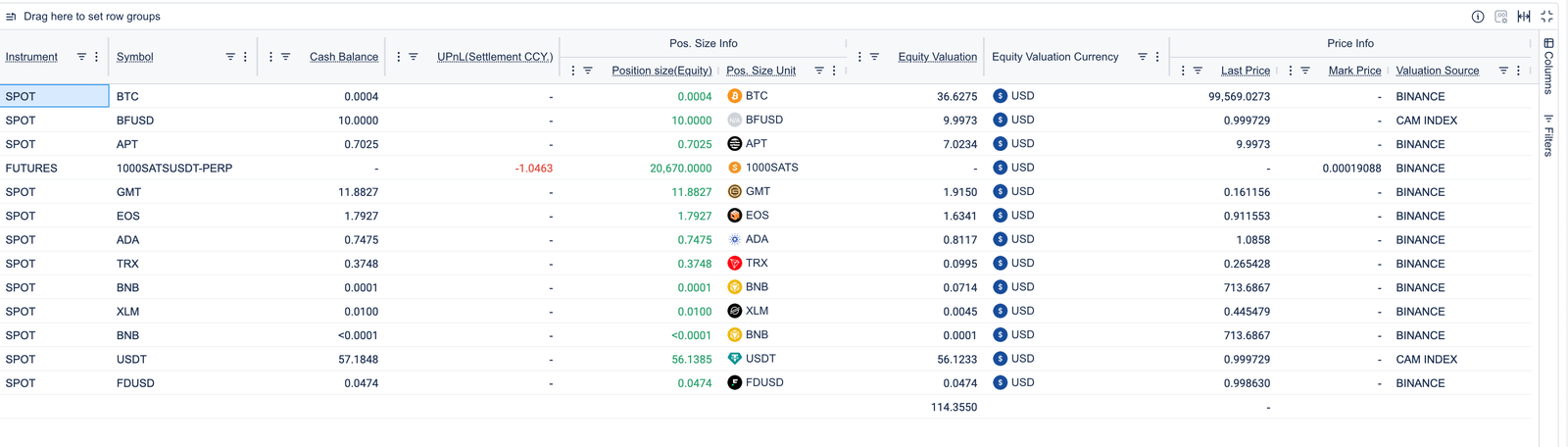
Exchanges provide account-level metrics to reflect the current state of assets. Key indicators include Cash Balance, Equity, and Unrealized PnL. Understanding their distinctions is integral to developing PMS (Portfolio Management Systems), middle-office systems, and accounting solutions.
Definitions
Cash Balance: Represents the actual assets held in an account, including deposited amounts, spot market transactions, and Realized PnL. Unrealized PnL is excluded.
Equity: Denotes the total value of an account, comprising Cash Balance plus Unrealized PnL from contracts denominated in the account's settlement currency.
- Formula: Equity = Cash Balance + Unrealized PnL
Key Distinctions
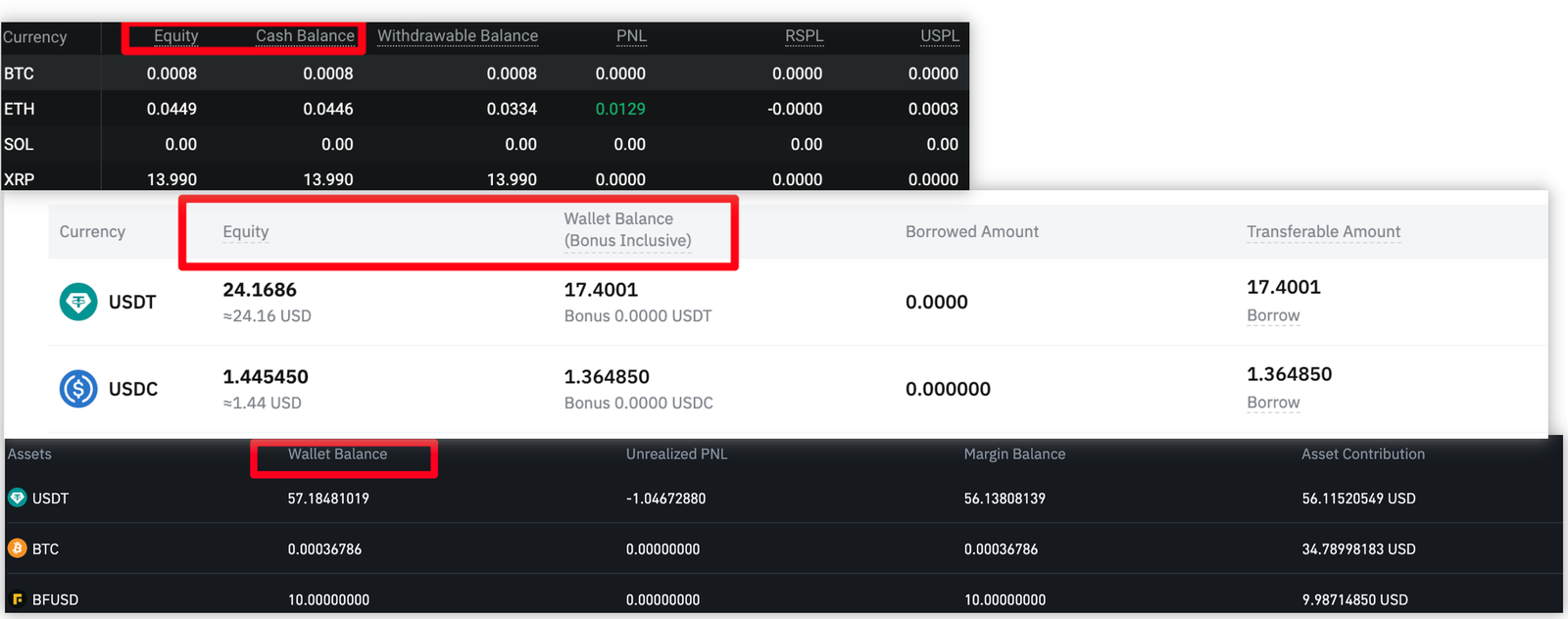
Cash Balance: A static measure, updated only when deposits, withdrawals, fees, or Realized PnL occur. In the middle office, it is critical for reconciliation using the formula: Opening Cash Balance + Transaction Records = Closing Cash Balance.
Equity: A dynamic value, reflecting real-time market movements in an account’s overall worth. For the front office (traders), it serves as a real-time indicator of position value.

Unrealized PnL and Account Valuation
Unrealized PnL (UPnL) is the primary variable affecting the relationship between Cash Balance and Equity. Different exchanges adopt diverse settlement methodologies, impacting how account value evolves over time.
Periodic Settlement (e.g., Deribit, Bybit)
UPnL is periodically (e.g., daily or hourly) converted into Realized PnL. This mechanism is designed for:
- Risk Mitigation: Reducing systemic risks from extreme market volatility.
- Liquidity Management: Allowing users to withdraw funds or adjust positions more efficiently post-settlement.
- Margin Protection: Keeping account Equity accurate to prevent liquidation risk.
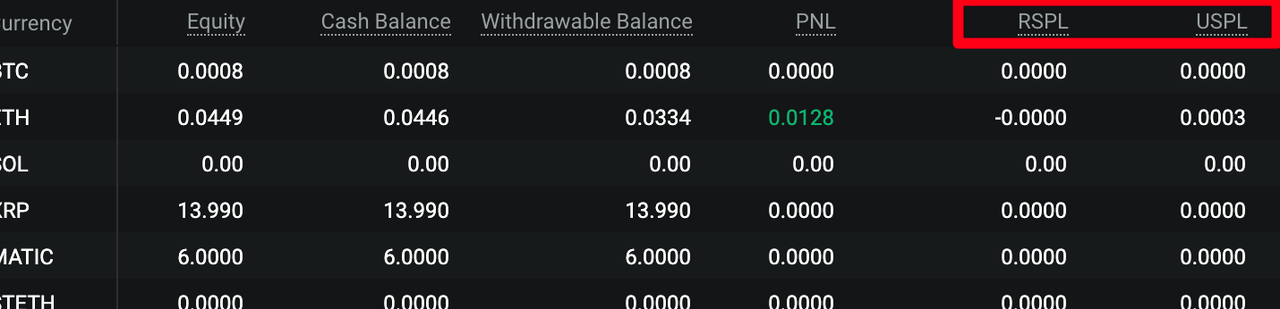
Real-time Settlement (e.g., Binance)
Binance and others use a "real-time settlement" model where UPnL continuously recalculated in real time. Rationale includes:
- User Experience: Avoiding fluctuations caused by fixed settlement periods.
- Technical Agility: Alleviating system batch settlement loads in high-volatility markets.
- Minimized Disruptions: Allowing users to adjust positions freely without additional fees or slippage associated with periodic settlements.

Transaction Records and Capital Flows
Exchanges generate transaction records across various services. Beyond business records, exchanges provide Capital Flow Statements, which summarize transaction records across business types, documenting asset quantity changes and updated cash balances at specific timestamps.
Table: Transaction Records Provided by CEXs (e.g., Binance)
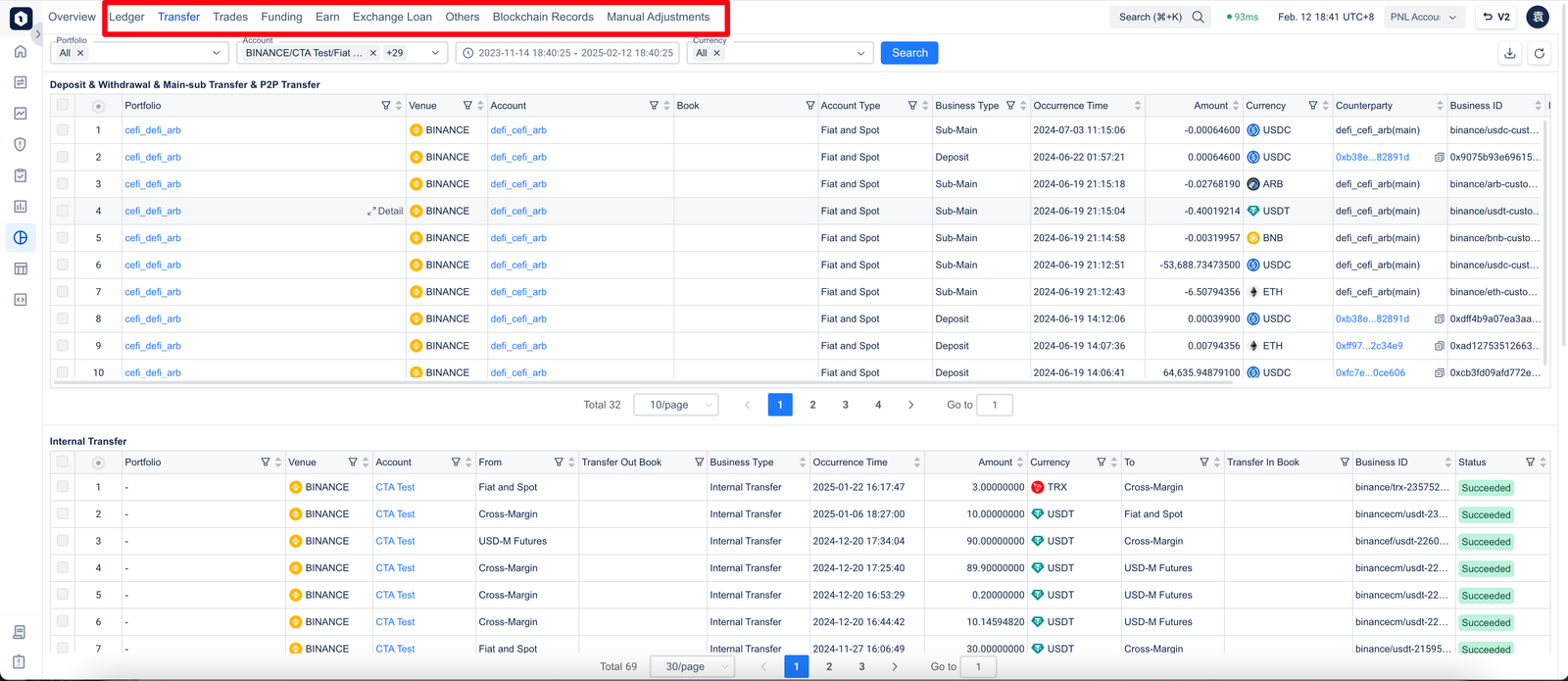
Data Access from Exchanges
Users can obtain exchange data through multiple channels, each serving different business requirements:
Table: Methods for Acquiring Transaction Records
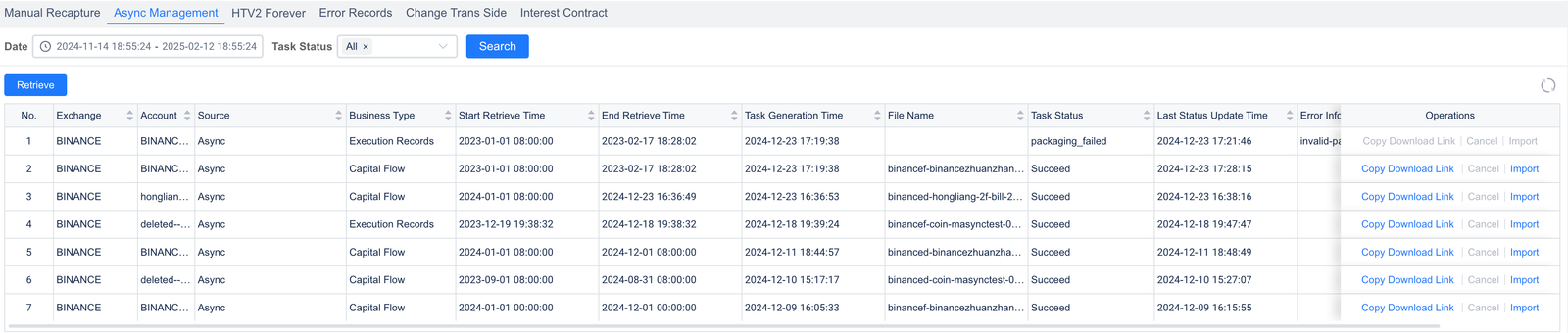
To address diverse business requirements, 1Token supports Websocket, REST, and Async API integrations.
Conclusion
CEX platforms provide two essential layers of data: account state data (reflecting balance and valuation) and transaction data (reflecting business activity and flows).
Understanding these layers and how they interact, such as the settlement of UPnL, is critical for interpreting exchange accounts and maintaining institutional-grade trading operations. 1Token helps bridge that gap by structuring raw CEX data into a form that supports reconciliation, reporting, and risk management.
Gloria Yao leads North America business development at 1Token, working closely with fund administrators, accounting firms, asset allocators, and institutional fund clients across the digital asset space.
She has extensive experience supporting fund administration and accounting clients, including Big 4 teams, with strong expertise in crypto fund accounting, reconciliation, NAV support, and performance reporting. Gloria helps institutions leverage 1Token’s accounting technology to improve efficiency, transparency, and data reliability.
.png)