Home > OCF Certifications > Crypto Accounting Academy (CAA)
Learn crypto accounting through real-world workflows
Master how to record, reconcile, and report on digital asset activity using the tools and processes finance teams use in practice.
Employees from these organizations also joined our programs










Program overview
This program is built to teach crypto accounting the way it actually works in practice. Instead of theory-heavy lessons, you’ll follow real workflows used by finance teams, from tracking on-chain activity to reconciling wallets and preparing reports.
You’ll work through practical scenarios using industry tools, learning how to handle transactions across exchanges, wallets, and subledgers. By the end, you’ll understand how to structure crypto accounting systems, stay compliant with standards, and confidently manage digital asset reporting.
The goal is simple: give you the skills to go from raw blockchain data to accurate, audit-ready financials.

Live cohort based

7 weeks training

20 CPD/CPE credits

Lifetime access
What you will learn
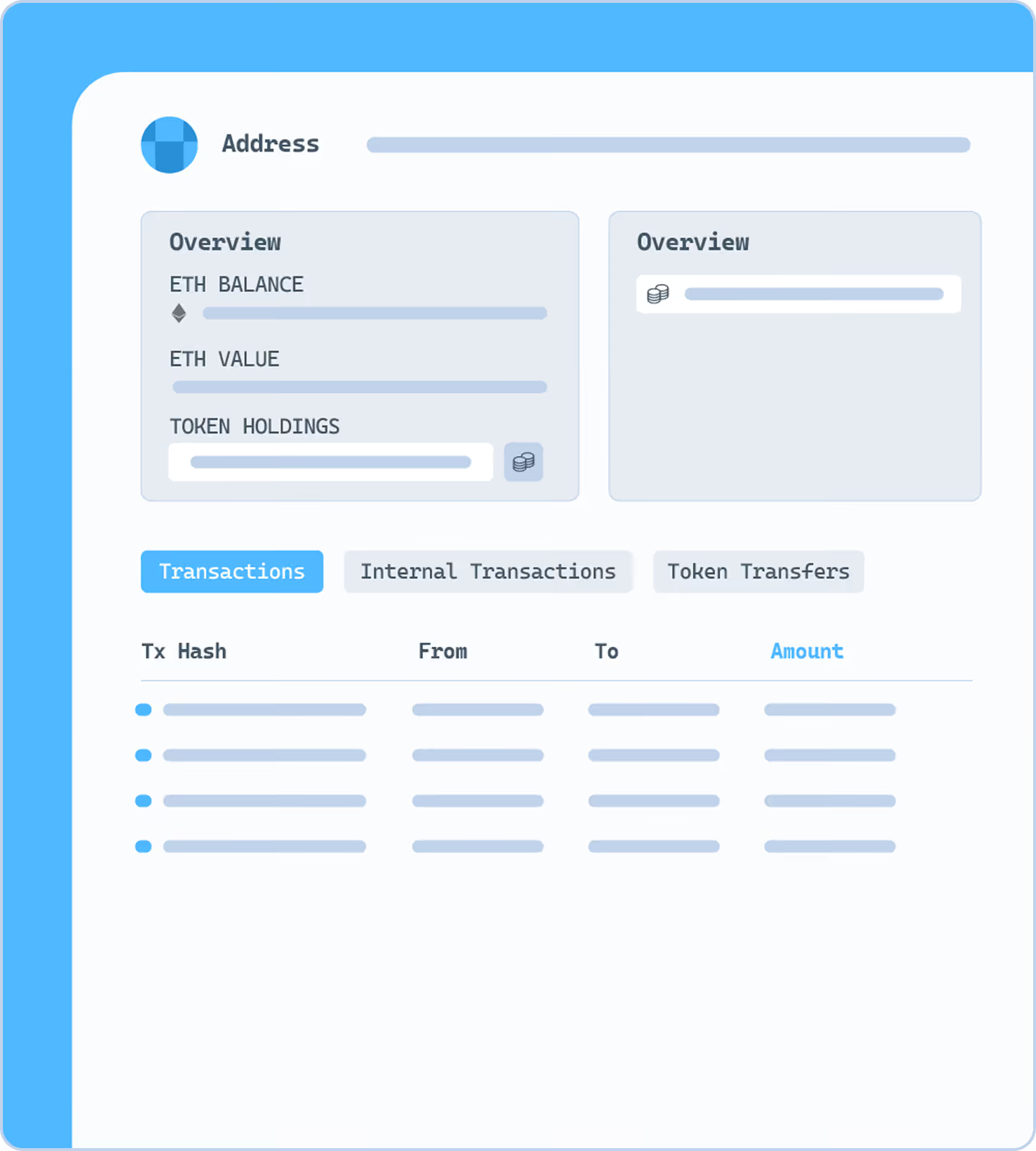
Learn to navigate block explorers across Ethereum, EVM-compatible chains, and Solana, from reading basic transaction hashes to interpreting advanced transaction logs for DeFi activity and on-chain reconciliation
- Block explorers overview including Etherscan & Solana explorers
- Transaction hashes examples
- Accrual versus cash basis accounting for onchain transactions
- Reconciliation block explorer data
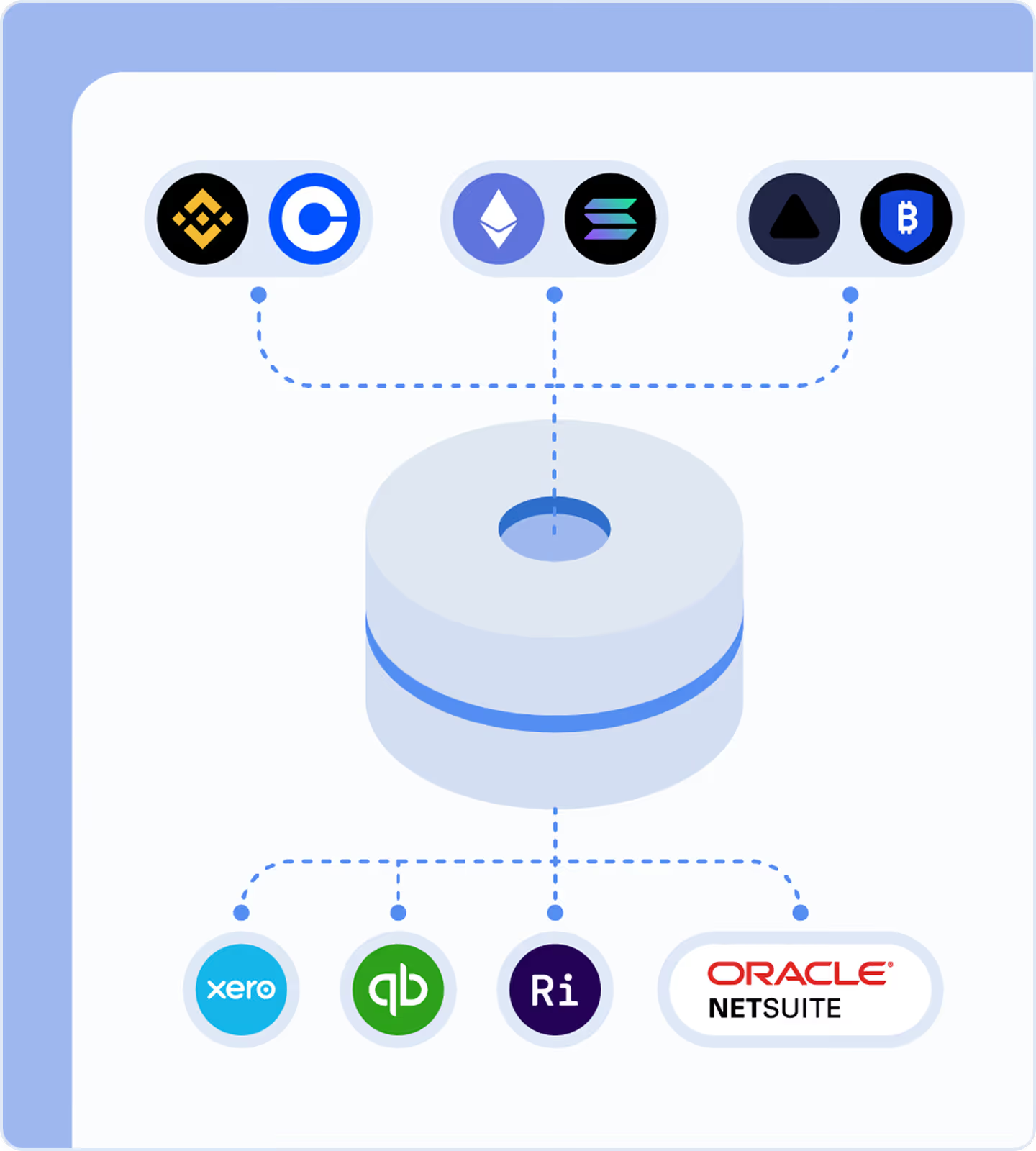
Set up and connect your accounting software to a crypto subledger and book real onchain transactions (Included: Full access to subledger)
- Setting up crypto chart of accounts in Xero & QuickBooks
- Connecting Xero/QuickBooks to subledger
- Token view vs. wallet view
- Booking sends, receives, swaps & internal transfers
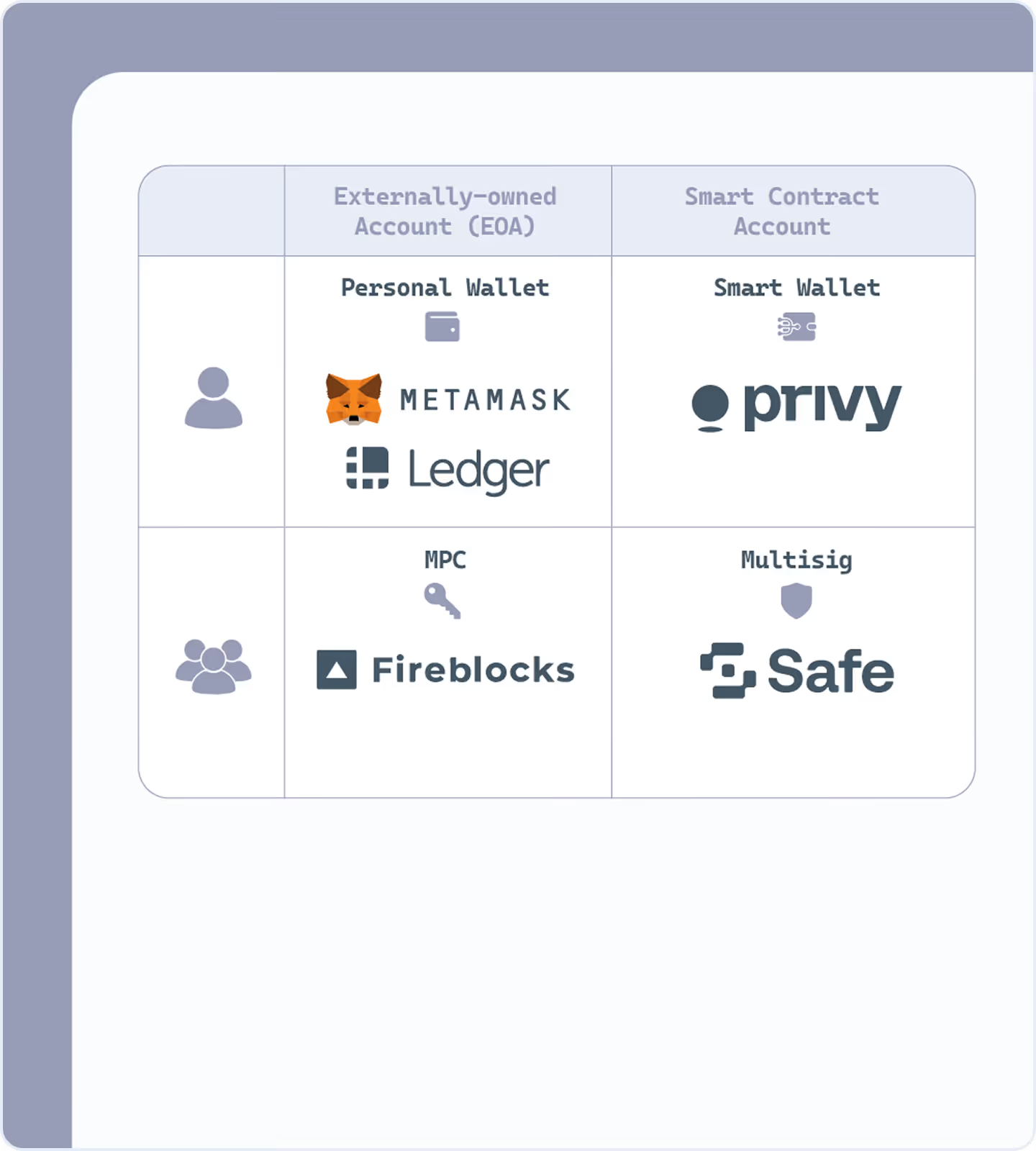
Understand the full custody landscape and learn how to evaluate, set up, and manage wallets for a business using digital assets.
- Custodial wallets: how they work and when to use them
- Non-custodial wallets: live demo including MPC and multisig
- Setting up multisig wallet policies
- Non-custodial management best practices
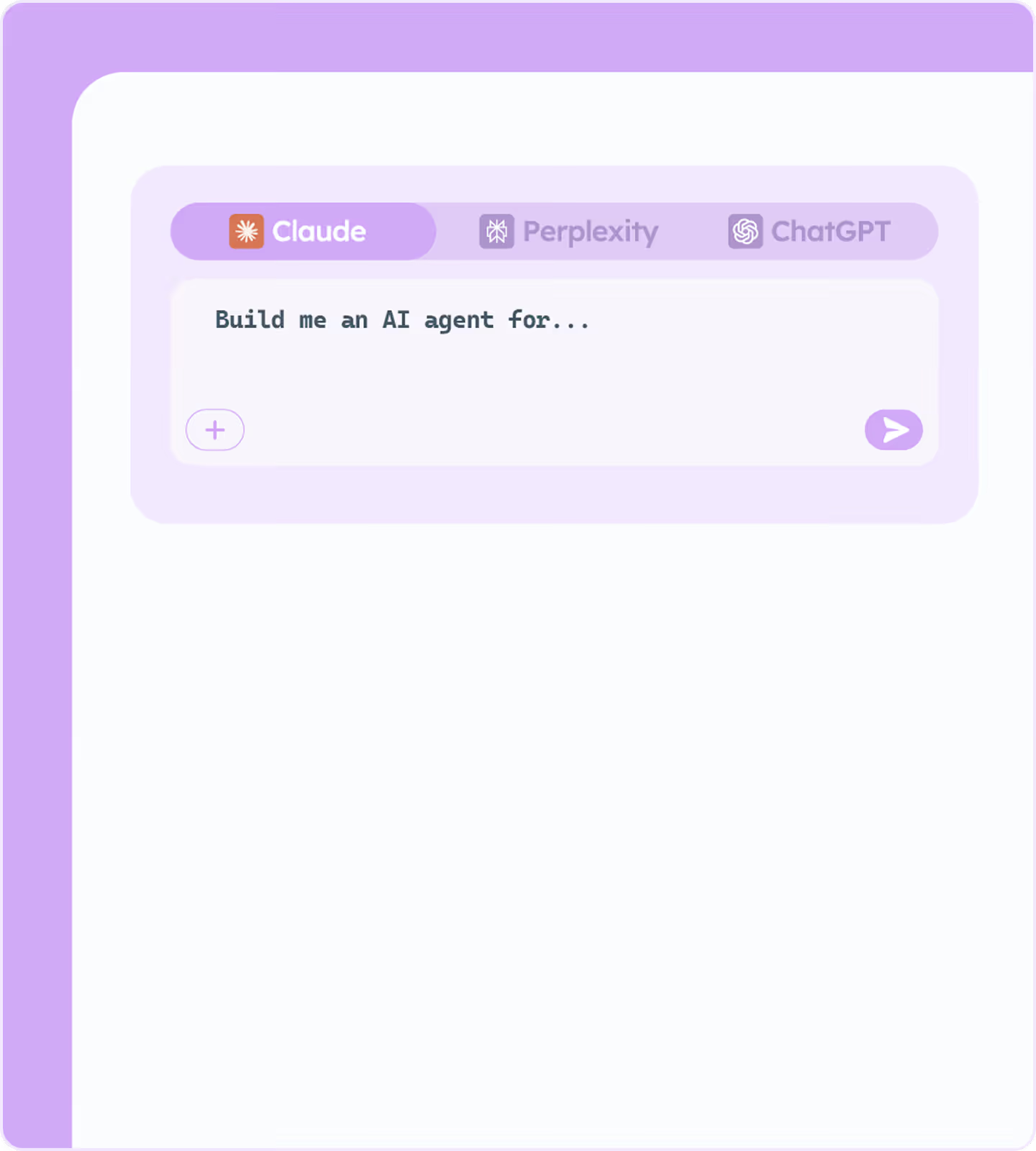
Learn how to build custom workflows and deploy AI agents in your onchain finance practice. (no engineering background required)
- AI tools, agents, and workflows: use cases for onchain finance
- Build your own Crypto Wallet Analyser:
- Build your own Crypto Dashboard: EVM & non-EVM chains
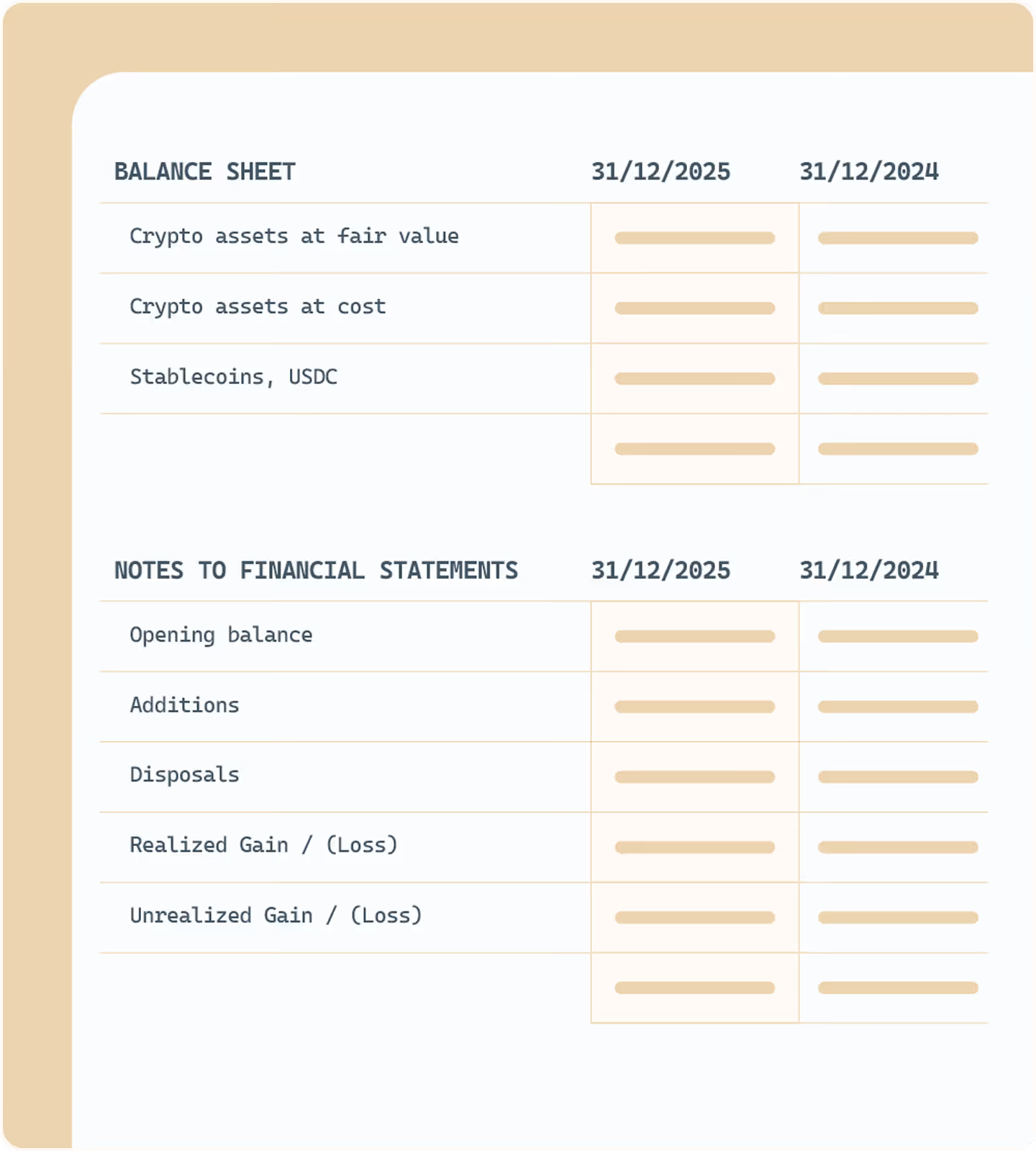
Apply IFRS and US GAAP to digital assets, and understand exactly how to present them on financial statements.
- IFRS & US GAAP: cost method vs. fair value method
- Accounting for stablecoins
- Financial statement disclosures
- Valuation & active market considerations
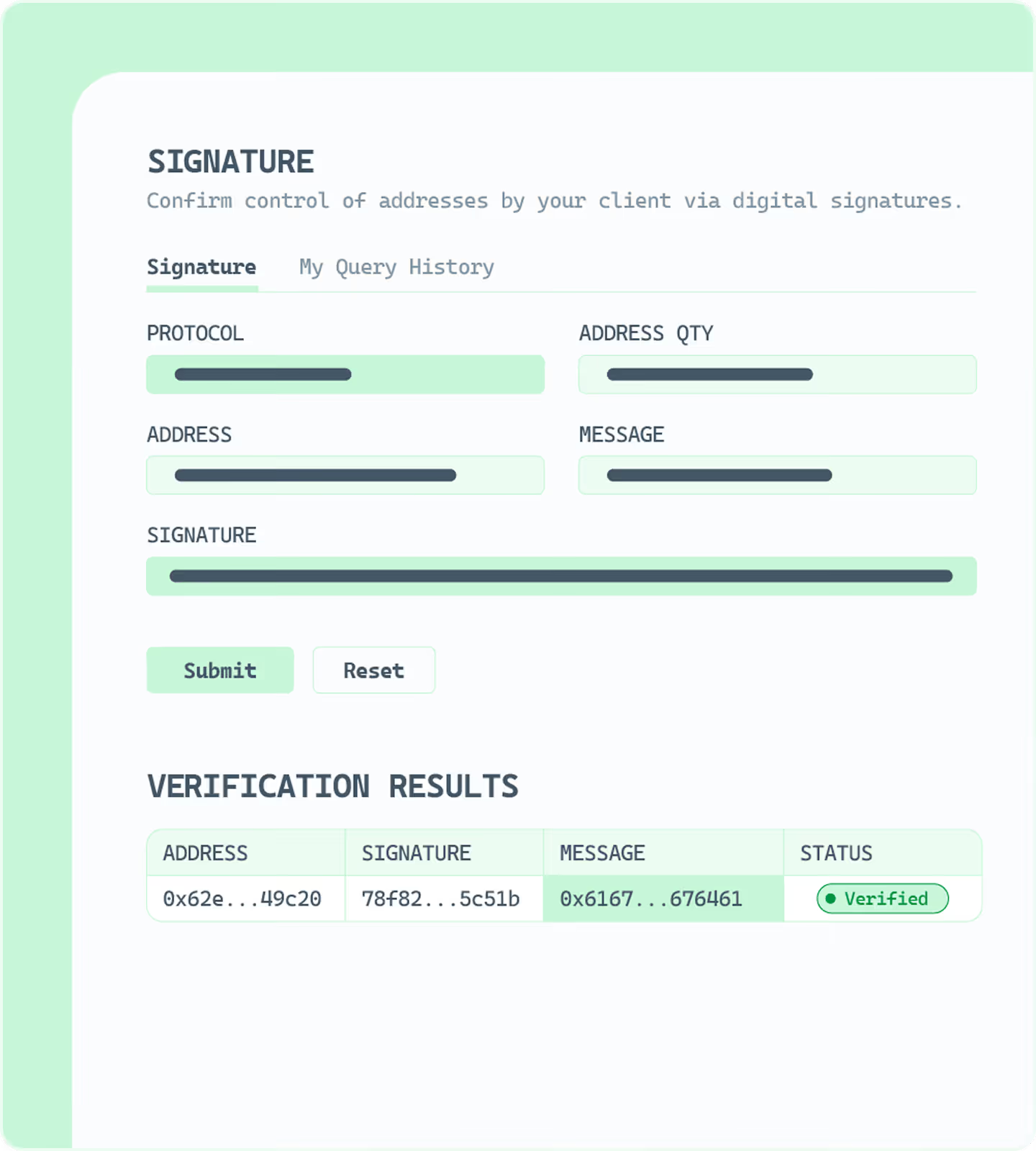
Understand what auditors look for in digital asset engagements, and how to prepare your organisation to pass.
- Audit assertions: Balance sheet & P&L
- Send-to-self vs. digital signature test
- Practical exercise using a crypto audit tool
- SOC reports for digital assets
Who is this certification for?

Accountants transitioning into digital assets
You want to expand your skillset with a globally recognized credential and become job-ready in one of the fastest-growing areas of finance.

Accounting firms servicing digital assets clients
Upskill your team to confidently handle crypto accounting, audit, and tax and turn digital assets into a core service offering.

Finance & ops professionals working at crypto native firms
You've just stepped into a fast-moving space and need practical, hands-on knowledge of the tools and workflows used on the ground.

Startup Founders & Operators
Get a clear, working understanding of how to manage your business finances using digital assets without needing to become an accountant.
Prerequisites
- A basic familiarity with cryptocurrencies like Bitcoin and Ethereum
- A foundational understanding of accounting principles
- Experience setting up and using a self-custodial wallet such as MetaMask
- A computer with internet access to attend live sessions and complete hands-on exercises
From fundamentals to real onchain workflows in 7 weeks
We bridge the gap between traditional finance and digital assets with education that actually prepares you for the job.
Expand all
Collapse all
Week 1
Block explorers
- Describe the purpose and features of block explorers
- Differentiate between accrual and cash basis accounting for on-chain transactions
- Reconcile on-chain transaction data using block
- Identify alternative on-chain data sources
- Apply best practices and implement practical tips
Week 2
Crypto Subledger Implementation
- How to set up a balance sheet in Xero and Quickbooks.
- Connect Xero and Quickbooks to a crypto subledger tool
- Pros & cons of using token vs wallet account to book journal entries
- Pull in crypto transactions and verify balances
- Book 4 transactions types (send, receive, swap & internal) into Xero and Quickbooks
Week 3
Accounting for Onchain Transactions
- Identify and classify data sources
- Document token flows through detailed walkthroughs
- Apply best practices when designing a chart of accounts
- Understand the accounting treatment for various transaction events (bridging, staking, lending, airdrops)
Week 4
Wallets & Custody
- Custodial wallets: how they work and when to use them
- Non-custodial wallets: live demo including MPC and multisig
- Setting up multisig wallet policies
- Non-custodial management best practices
Week 5
Using AI in Crypto Accounting & Finance
- Setting up your personal AI OS using Claude Cowork
- AI tools, agents & workflows: practical use cases for onchain finance
- Build your own Crypto Wallet Analyser
- Build your own Crypto Dashboard for EVM and non EVM chains
Week 5
Cryptocurrency in Business
- Establish payment processes and internal controls
- Manage token compensation, including designing vesting schedules and lockups
- Analyze tokenomics and implement strategies for native token management
- Develop web3 liquidity management practices & assess risk management strategies
Week 6
Web3 Company Formation
- Develop a framework for selecting jurisdictions for web3 startups and DAOs
- Analyze the use of token SPVs
- Identify and evaluate the best jurisdictions for incorporation in the web3 space
Week 6
Tax Treatments
- Determine the character of crypto income as capital gains or ordinary income.
- Perform a deep dive into calculating cost basis
- Analyze tax implications for DeFi activities
- Assess NFT-specific tax obligations
Week 7
Accounting Standards
- IFRS & US GAAP: cost method vs. fair value method
- Accounting for stablecoins
- Financial statement disclosures
- Valuation & active market considerations
Week 7
Audit Readiness
- Audit assertions: Balance sheet & P&L
- Send-to-self vs. digital signature test
- Practical exercise using a crypto audit tool
- SOC reports for digital assets
Why OCF Institute
Our unique learning methodology gives you exactly what you need. Live sessions, real instructors, and a global cohort that keeps you accountable from week one to graduation
Access Industry Tools
Hands-on implementation of the most widely used tools in digital asset accounting and finance.
Live Assistance from Instructors
Real practitioners, not career educators. Have direct access to our instructors during the course, and long after you graduate.
Quizzes for All Modules
No final exam but quizzes at the end of every module with a 70% pass mark.
Curriculum Updated Every Cohort
New modules, new instructors, and evolving AI workflows, our curriculum is updated every cohort to reflect how the digital assets industry actually works today.
Meet our instructors

Adrian Cachinero Vasiljevic
Co-Founder at Steakhouse Financial
%202.avif)
Bassil Eid
Managing Partner at Detof
%202.avif)
Bo Zhang
Director at Canton Foundation
%202.avif)
Cameron Browne
Co-Founder of Darien Advisors

Christophe Lassuyt
CEO at Request Finance

Jack Gale
Contributor at kpk, Gnosis DAO, Beefy

Jeremy Nau
Partner at The Network Firm

Jonathan Turnham
Partner at NXT Law

Mackenzie Thota
CEO at Hashbasis

Max Kalyuzhnyi
Head of Finance at Makina

Michael Bacina
Partner at NXT Law

Nick Ward
Partner at The Network Firm

Nik Pletikos
Founder at Provecto

Rohit Goel
Treasurer of Protocol Labs

Umar Mallam Hassam
Founder at OCF Institute & Host at The Accountant Quits
Our students apply onchain finance in their day-to-day work
Frequently asked questions
What is Crypto Accounting Academy?
The Accountant Quits ‘Crypto Accounting Academy’ is the first comprehensive course and certification program to help accountants learn crypto accounting.
It’s composed of 7 modules to provide you with the foundation of having the practical knowledge to run the operations and bookkeeping transactions on the blockchain.
After completing every module, you can take an exam and earn a NFT-based certificate to build up your crypto accounting track record.
Who is the Crypto Accounting Academy for?
Our programs are designed for finance professionals at different stages. Whether you're transitioning into digital assets or already working with them, you can start at the level that fits your experience.
What’s the Prerequisite Accounting Knowledge in Order to Enrol?
The Crypto Accounting Academy is designed as a basic level course that provides practical knowledge on how to manage a business using crypto.
An accounting degree or certification is not a prerequisite for this course. While a basic understanding of accounting principles is recommended, no advanced preparation is required.
The course includes one module that explores the relevant IFRS and US GAAP accounting standards for crypto assets, but the content remains accessible to learners without prior expertise in accounting.
Our course materials are revised or reviewed at least every 2 years.
Does the Crypto Accounting Academy have an official certification?
No, the course does not have official accreditation by any specific accrediting body or institution.
We believe that the value of our course lies in the quality of the content and the expertise of our instructors, rather than formal accreditation.
Will I receive a certification upon completion of the course?
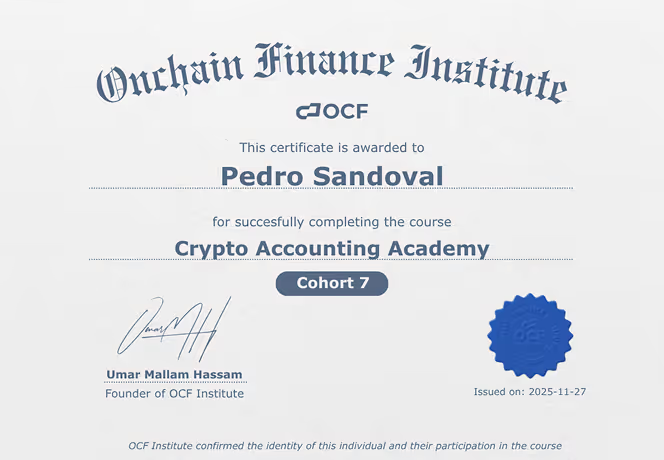
Yes, once you complete all the course chapters and pass the quizzes, you will receive a certificate. You can then add the certificate to your resume or LinkedIn profile, helping you stand out as a crypto accounting specialist.
How do I apply to join the Crypto Accounting Academy?
1. Fill in the application form
2. You will then be invited for a 15mins onboarding call to assess whether the course is right for you, and answer any questions you may have
Will I have the chance to interact with instructors?
Yes, absolutely! We encourage active student-instructor interaction as part of the learning experience. Students will have the opportunity to engage with our instructors through live Q&A sessions.
How and when will the online classes be held?
The course is 'Group Internet Based' and are taught live online.
In order to accommodate students globally on different time zones, the classes will be held every Thursday at 20:00 GMT or 16:00 ET.
In case you have missed a live class, we record every classes and make it available for you to replay at your convenience. However, please note that a CPE credit cannot be earned if the student did not attend the online session.
What types of payments are accepted?
We accept all standard credit and debit card options including Visa, MasterCard, American Express, as well as other payment methods that may be enabled on the website.
Is the Crypto Accounting Academy CPE accredited?
Build On Story LLC is registered with the National Association of State Boards of Accountancy (NASBA) as a sponsor of continuing professional education on the National Registry of CPE Sponsors. State boards of accountancy have final authority on the acceptance of individual courses for CPE credit. Complaints regarding registered sponsors may be submitted to the National Registry of CPE Sponsors through its website: www.nasbaregistry.org
The field on study falls under 'Specialized Knowledge'.
How many CPE credits will I receive upon course completion?
Students will receive 20.4 CPE credits. In order to be awarded the full CPE credits, the student must have attended the Group Live session in full for all classes and earn the course completion certificate.